The art of not being there.
Anyone can photograph a wedding. A photojournalist photographs your wedding — the one that actually happened, with the tears and the laughing fits and the grandmother who danced anyway.
Nobody posed for the pictures your family treasures most.
Documentary first.
Direction second.
CJ Studios is a documentary Jewish wedding photography and cinema studio in Toms River and Lakewood, NJ, covering weddings across New York and the tri-state. Documentary is simply how we work: we watch, we wait, we anticipate — and photograph the day as it actually happens, photo and film, one team.
A photojournalist is trained to tell a true story in pictures — to anticipate the moment instead of staging it. At a simcha, that means knowing the badeken is about to break your mother’s composure before it does, and already standing in the right place, silently.
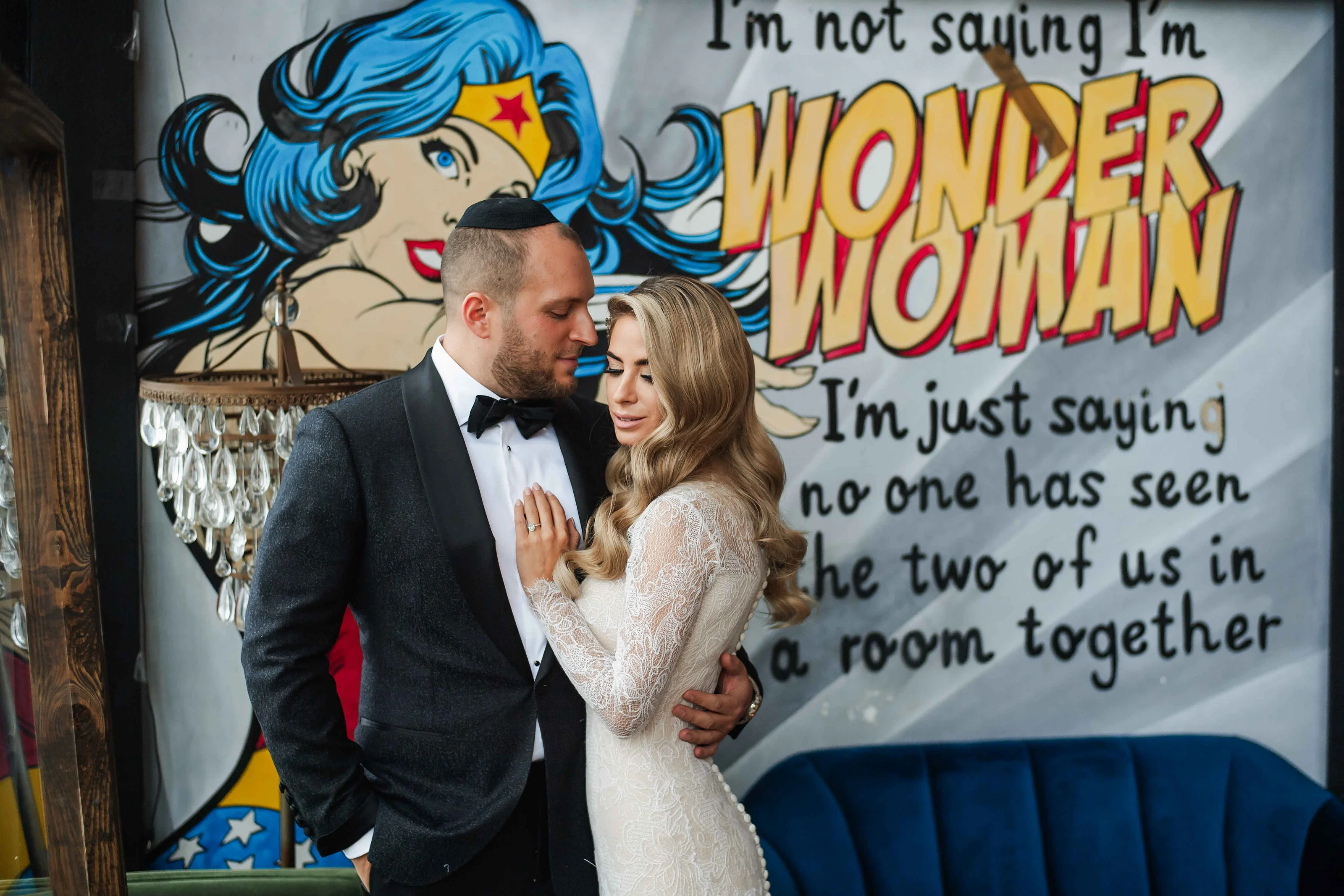
What it adds is truth. The posed pictures show how everyone looked; the photojournalistic frames show how it felt — the chosson’s hands shaking under the chuppah, the friends’ circle collapsing with laughter, the zaide watching from his chair. Ten years later, those are the ones that get taken off the shelf.
Our photographers are photojournalists first: they know every minhag, every minute of the seder of the day, and how to be invisible inside it. Family formals still run from a list — fast, warm, organized — but everything else is captured as it happens, because it only happens once.
Anticipation
We know what comes next — so the camera is already there when it does.
Invisibility
No flash barrages, no directing the room — the simcha stays yours.
Story
Every gallery reads start to finish — a wedding, not a shot list.
So you know what you’re choosing.
Traditional
The photographer runs the room — stand here, look there, hold that a little higher. Lovely portraits, but the day bends around the camera.
Editorial
A fashion shoot inside a wedding — styled, lit, striking. Beautiful frames, but it asks you to perform your day rather than live it.
Documentary
We watch, we wait, we anticipate — and photograph the day as it actually happens. Minimal direction, maximum presence. The story, not a shot list.
“But we still want family pictures.”
Of course you do — and you’ll have them. Family formals run from a tight, organized list: fast and warm, usually ten or fifteen minutes, with a plan so nobody stands around waiting. Your parents get the portraits they’ll want on the wall.
They just don’t take over your simcha. Everything else — the badeken, the chuppah, the dancing, the grandmother who danced anyway — is captured as it happens, because it only happens once.
Every wedding runs on its own clock. We already know yours.
The biggest moments of a simcha are the fastest — over in seconds, impossible to restage. Anticipation is the whole craft: knowing what’s coming and already standing in the right place, silently. A few we never miss:
Two celebrations at once
The men’s and women’s simchas run at the same time — so a second photographer, a woman for the kallah’s side, covers what one camera never could.
The tish & kabbalas panim
The chosson gives over Torah while his friends do everything to interrupt — singing, heckling, pure candid joy — as the guests are received.
The badeken
The veiling — often the most emotional thirty seconds of the night. It turns from intimate to chaos in a breath, so we’re in place before it does.
The chuppah
The vows, the ring, the shattering of the glass and the roar of mazel tov — one of us on the couple’s faces, one on the room around them.
The dancing
Hours of it — low light, fast feet, the couple lifted on chairs. The frames that separate a photographer who knows what’s coming from one who doesn’t.
The mitzvah tantz & mezinke
The reverent late-night dancing, and the parents’ dance when their last child marries. If your family keeps these, we know how to honor them.
Photography is the simultaneous recognition, in a fraction of a second, of the significance of an event.
Before you ask.
Want your wedding told this way?
Let’s talk →
