

Jewish wedding photography
Your traditions set the rhythm.
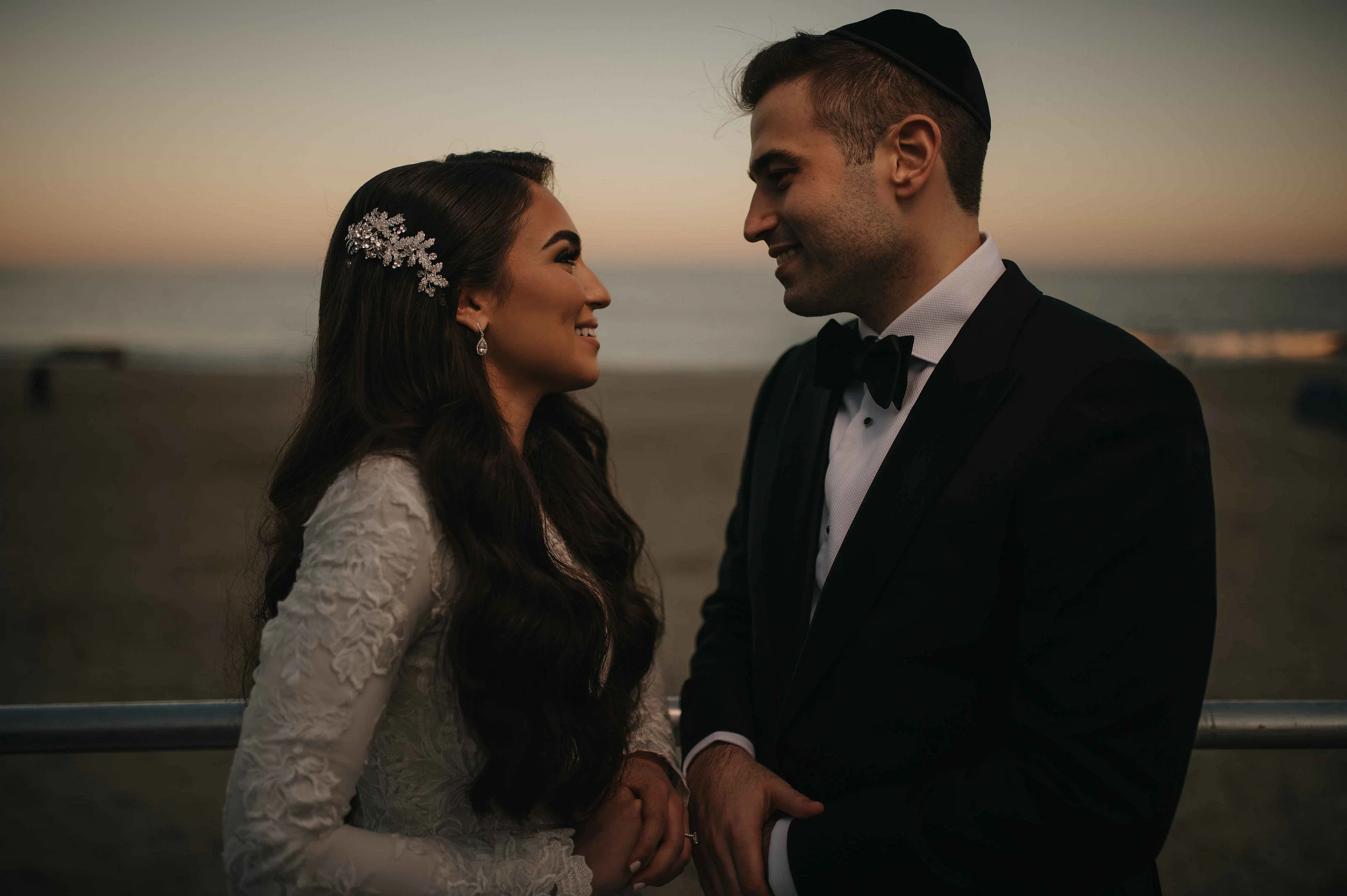
A quiet portrait can sit alongside the energy of a full wedding story. Photograph: CJ Studios.
The photography plan should follow.
A Jewish wedding can move from a quiet blessing to a room full of singing in a few minutes. Good photographs depend on understanding that rhythm: where the important moments happen, who needs to be there, and when a photographer should give you space.
This guide helps you make those decisions before the wedding. Every Jewish celebration begins with your own family's customs and your officiant's ceremony plan. A label alone does not tell a photographer how your day will unfold.
CJ Studios photographs and films weddings across New Jersey, New York and the tri-state area. Start with our wedding photographs, then use the questions below to plan coverage that fits your celebration.
A practical guide to planning your coverage.
Start with the people and the customs
Before choosing a package, write a short brief for your photographer. Include the venue, the anticipated ceremony time, the number of locations and the traditions that matter to your families. Mention separate receptions or dancing, any preference for the photographer covering each area, and whether you will see each other before the ceremony.
Add the things a generic checklist cannot know: a grandparent who needs a chair nearby, a sibling joining by video, an heirloom tallit, or a parent you want photographed during a particular blessing. Share sensitive family arrangements privately so the group photographs can be handled with care.
Your rabbi or officiant determines the religious requirements. The photographer's job is to understand that plan and document it respectfully.
Plan coverage by what is happening at the same time
The useful question is not simply, “Do we need two photographers?” It is, “Which moments would one person have to choose between?”
If the groom's tisch and the bride's reception take place in different rooms, map who will cover each. At the chuppah, consider how close ceremony photographs and wider family reactions will be covered. If dancing takes place on separate sides of a mechitzah, discuss access and coverage on both sides in advance.
Two photographers can help when important events overlap, but the number alone is not a complete plan. Ask who will be assigned to each part of the wedding, how the team communicates, and which hours each person is present. A smaller celebration with fewer simultaneous events may need a different arrangement.
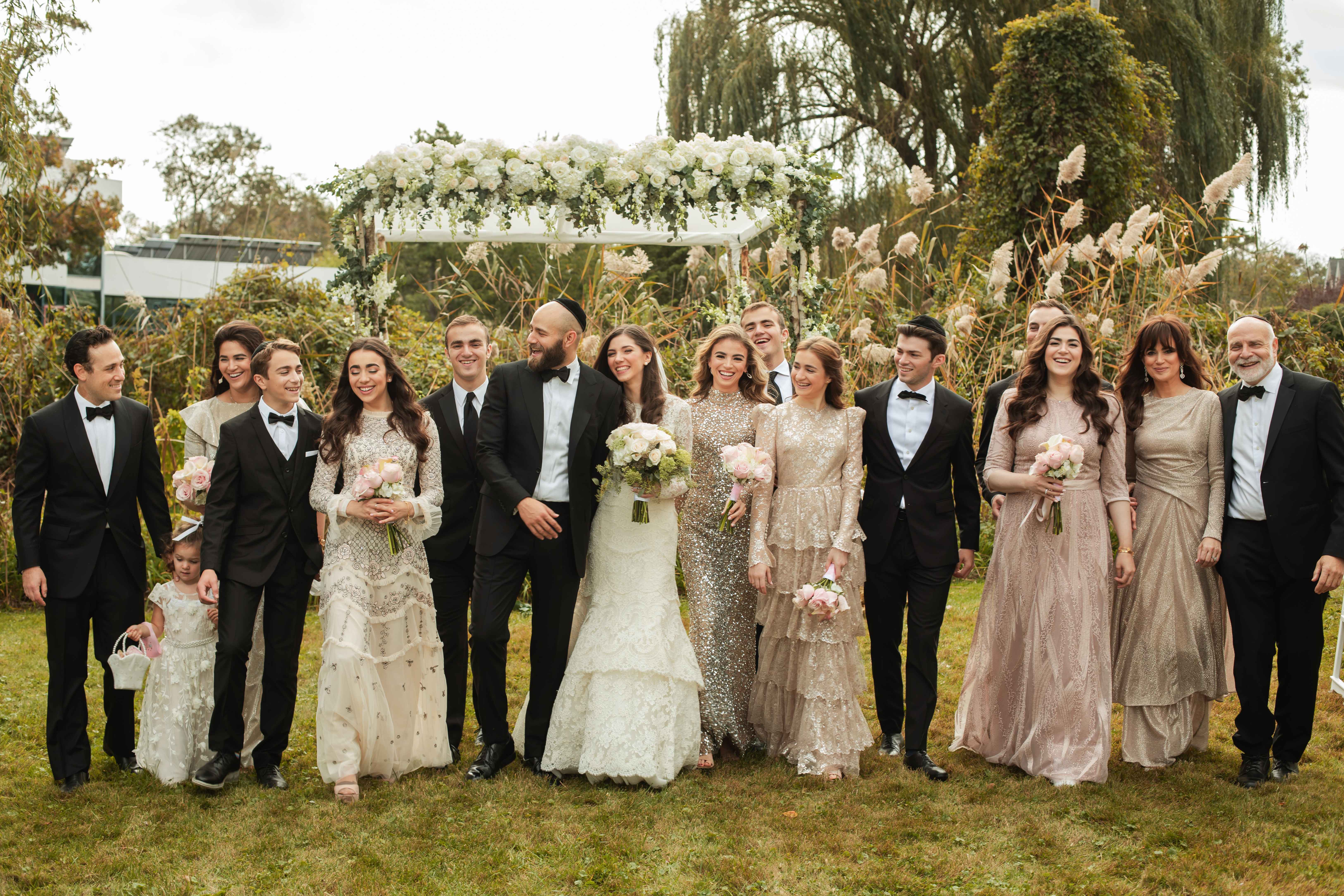
A family portrait photographed by CJ Studios.
The ceremony moments worth planning around
The sequence below describes common moments, not a compulsory schedule. Chabad's Guide to a Jewish Wedding is useful background; confirm the version your own community follows.
Kabbalat panim, tisch and ketubah signing
In the traditional reception described by Chabad, the bride and groom receive guests separately. Ketubah signing may happen during this part of the day. Tell the photography team where the signing will take place and who will announce it, so an important moment is not missed while another room is being photographed.
Signing the ketubah and reading it publicly under the chuppah are different moments. Both may deserve coverage, along with the expressions of the people watching. Read more about kabbalat panim and the ketubah.
Badeken: the approach matters as much as the veil
Where a badeken, also spelled bedeken, is part of the wedding, the story includes the groom's approach, the veiling and the family blessings around it. Agree on a clear route and make sure the photographer knows when the procession begins. This is a moment to anticipate, rather than interrupt for a posed photograph. Chabad explains the ceremony in its guide to the badeken.
Chuppah: protect the view and the meaning
Share the procession order, the planned standing positions and any circling customs. Escort arrangements and circling vary; not every couple follows seven circles or the same parent pairings. See Chabad's explanation of the procession.
Before the ceremony, the team should confirm where cameras may stand and whether flash or movement is restricted. Designated witnesses need an unobstructed view of the ring placement; a photograph must not get in the way of their role. The officiant can explain the requirements for your wedding. See Chabad's discussion of wedding witnesses.
The sheva brachot are the seven wedding blessings. Ask who will recite them and how those being honored will be invited forward, so the photography team can anticipate the movement. Confirm the cue for breaking the glass, too. Among its meanings is remembrance of Jerusalem; it is more than a signal for applause. Chabad discusses these moments in Finalizing the Nuptials.
Yichud: leave room for privacy
When yichud is part of the celebration, keep the actual period of seclusion private. Arrange any doorway photograph separately and schedule portraits around the time your officiant has set aside. Chabad notes that the timing differs among customs, including the Sephardic practice it describes after the reception. There is no single portrait timetable that fits every wedding. Read its explanation of yichud.
Choose a portrait plan that fits your day
If you will see each other before the ceremony
A planned first look can create a quieter window for couple portraits and some family groups. Work backward from when you need to be ready for the reception and ceremony, allowing for getting dressed, travel and gathering relatives. Check that the plan fits your customs before building the rest of the schedule around it.
If your first meeting will be at the badeken or chuppah
Photograph each person separately beforehand, along with the family combinations that are appropriate. Reserve a later window for portraits together and combined family groups. That window should account for private time, food, travel between spaces and the reception entrance—not just the minutes spent taking photographs.
For either approach, ask for an indoor portrait option if the weather changes. If sunset photographs matter to you, check the actual light at your venue and agree on a flexible opportunity. The ceremony should not be rushed to chase a particular patch of sunlight.
Make family photographs easier before anyone arrives
A useful family list contains names and combinations, not just “bride's family” and “groom's family.” Separate the essential groups from the extra photographs you would like if time allows.
- Name a helper from each family. Choose someone who recognizes the relatives and can gather the next group while the current one is photographed.
- Plan for comfort and access. Consider seating, walking distances, young children and relatives who may need to leave early.
- Group similar combinations together. Avoid repeatedly calling the same people back from another room.
- Share family sensitivities in advance. Give clear, discreet instructions about combinations that should be included or avoided.
The aim is a calm portrait session with the people who matter, while leaving time to enjoy being with them.
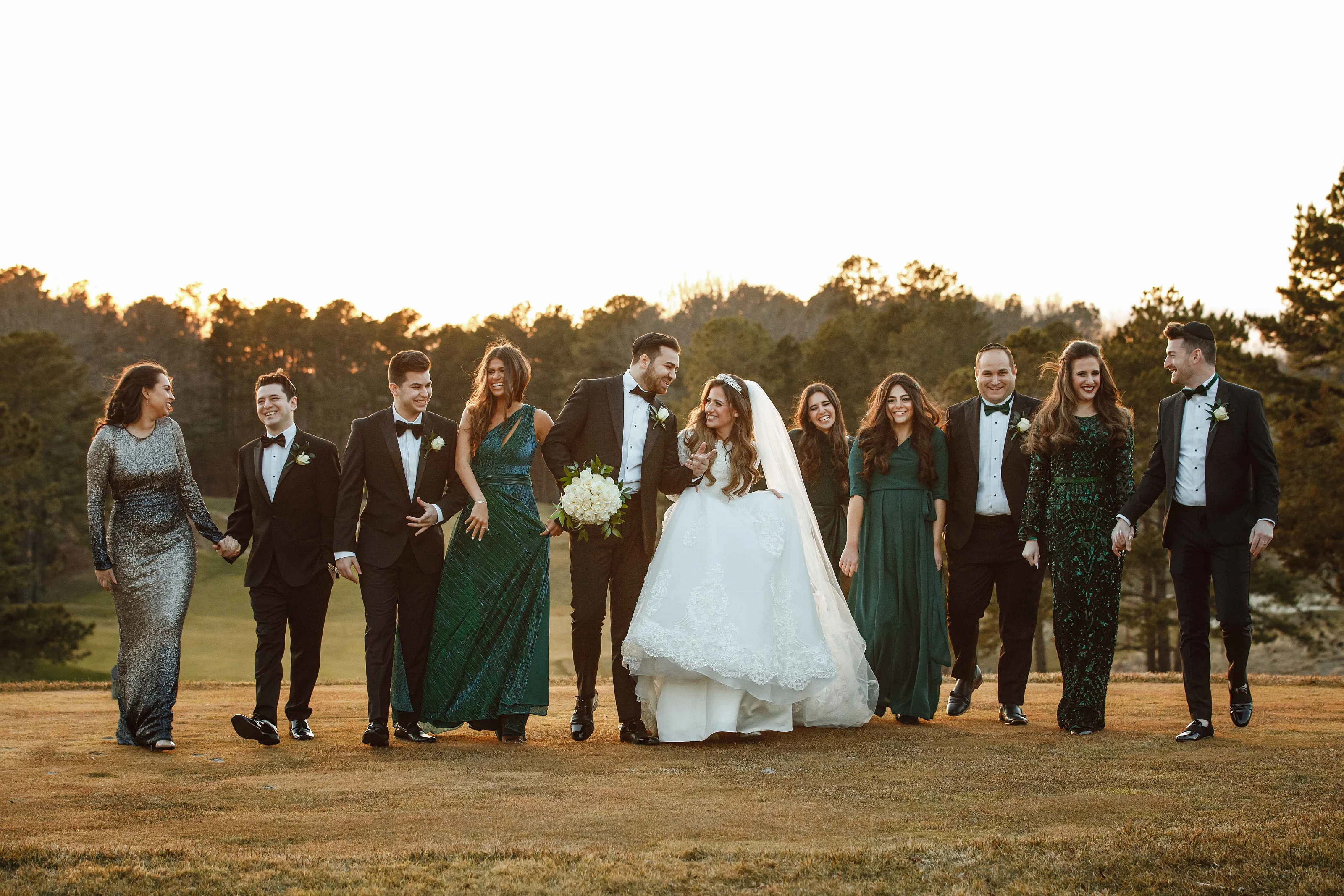
An outdoor wedding group portrait by CJ Studios.
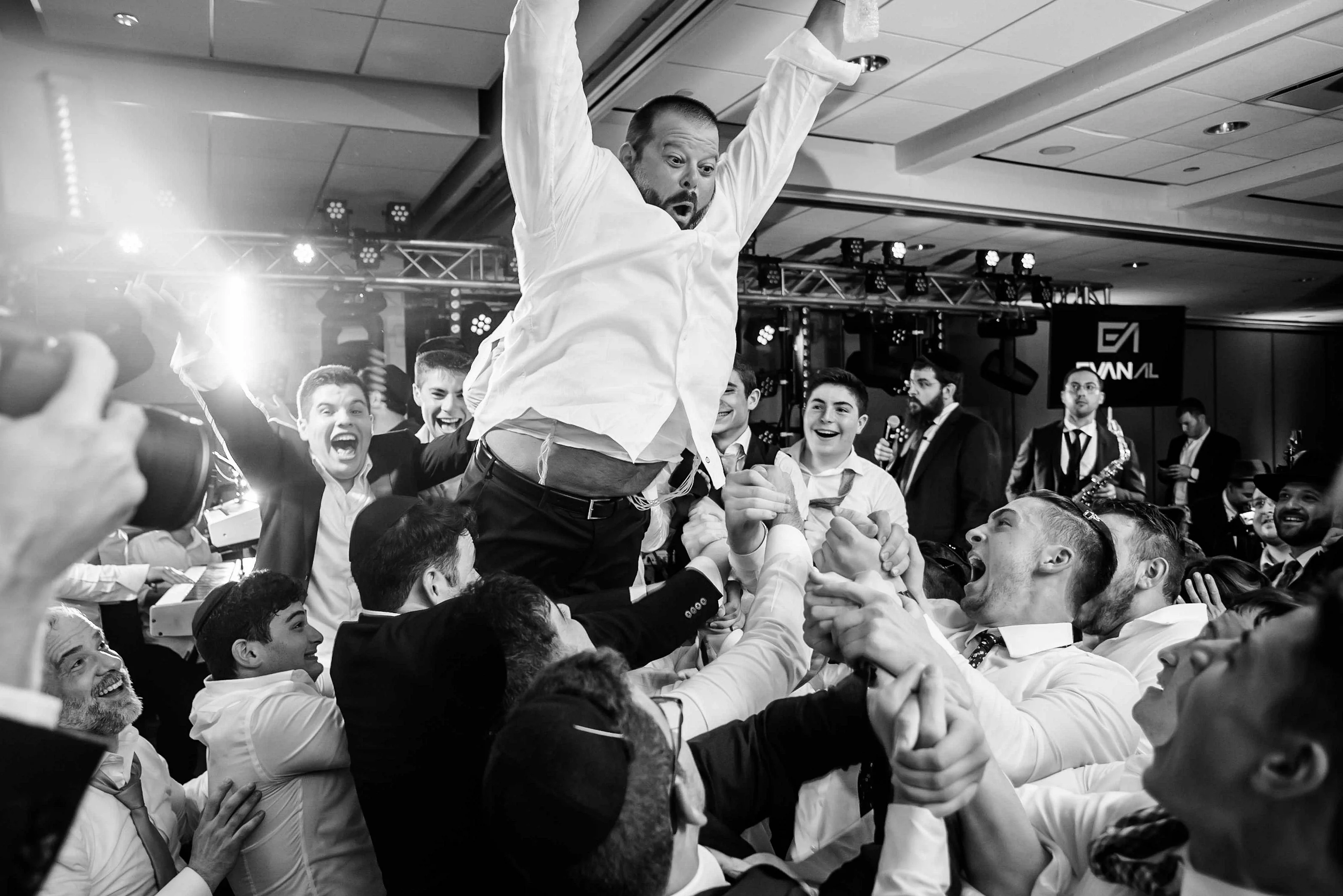
A wider frame makes room for the reactions around the celebration. Photograph: CJ Studios.
Give the dancing its own place in the plan
Tell the team about the reception entrance, dance sets, speeches and any family shtick you are looking forward to. If you are planning a hora or chair lift, discuss where it will happen so the photographs can include both the larger scene and the expressions within it.
For separate dancing, agree on coverage of both areas rather than assuming one photographer can move freely between them. Ask how the team handles a dark ballroom, changing stage lights and a crowded floor. These are good reasons to look at a complete evening gallery before booking.
Balance beautiful portraits with the feeling of the wedding
Directed portraits and documentary photographs serve different purposes. Portraits give you a considered record of the two of you and your families. Candid photographs preserve the small exchanges between those portraits: a hand on a shoulder, a laugh during a speech, or someone watching from the edge of the dance floor.
Ask to see a complete delivered wedding gallery, including indoor ceremonies and evening dancing. A few standout images show a photographer's taste; a full gallery helps you assess consistency, storytelling, skin tones and how different lighting conditions are handled.
If you enjoy editorial photographs, direct flash, black and white or intentional motion blur, show a few examples and explain what appeals to you. Agree on a balance. An expressive dancing frame can be part of the story while clear family portraits and meaningful ceremony photographs remain central.
A wedding photography brief you can copy
Copy these prompts to start planning your coverage requirements.